
Mosquito Control in Lewisville, TX
Mosquito calls in Lewisville climb every May once Asian tiger populations hatch out. Monthly barrier service keeps yards usable through the Texas summer.
- Fast dispatch
- Same-day where available
- DFW-wide coverage
Mosquito Control in Lewisville, TX
Mosquito Control is dispatched fast across Lewisville, TX, with same-day windows sometimes available depending on the local provider's route. Coverage spans 6 Lewisville ZIP codes in Denton County. Denton County stretches from the urban core out to Lake Lewisville and the rural northwest.
Pest call from a Lewisville address usually starts one of three ways: a sighting in the kitchen, evidence in the attic, or a swarm in the yard. Mosquito Control covers a defined subset — asian tiger mosquitoes, culex mosquitoes — and this page lays out the inspection-to-resolution process for a Lewisville home.
Lewisville coverage runs ZIP codes 75029, 75056, 75057, 75065, 75067, and 75077 across Denton County, with a population near 125,000 and a low-density build pattern. The local profile leans toward fire ant, asian tiger mosquito, roof rat, subterranean termite. Denton County stretches from the urban core out to Lake Lewisville and the rural northwest. Lakeside mosquito pressure is heavy; older Denton city wood-frame housing keeps carpenter ant volume up; newer master-planned developments drive termite swarm calls. Fire ants dominate yards across the county.
Coverage spans Lewisville neighborhoods including Old Town Lewisville, Castle Hills, Lakeland Hills, Highland Village (Lewisville border).
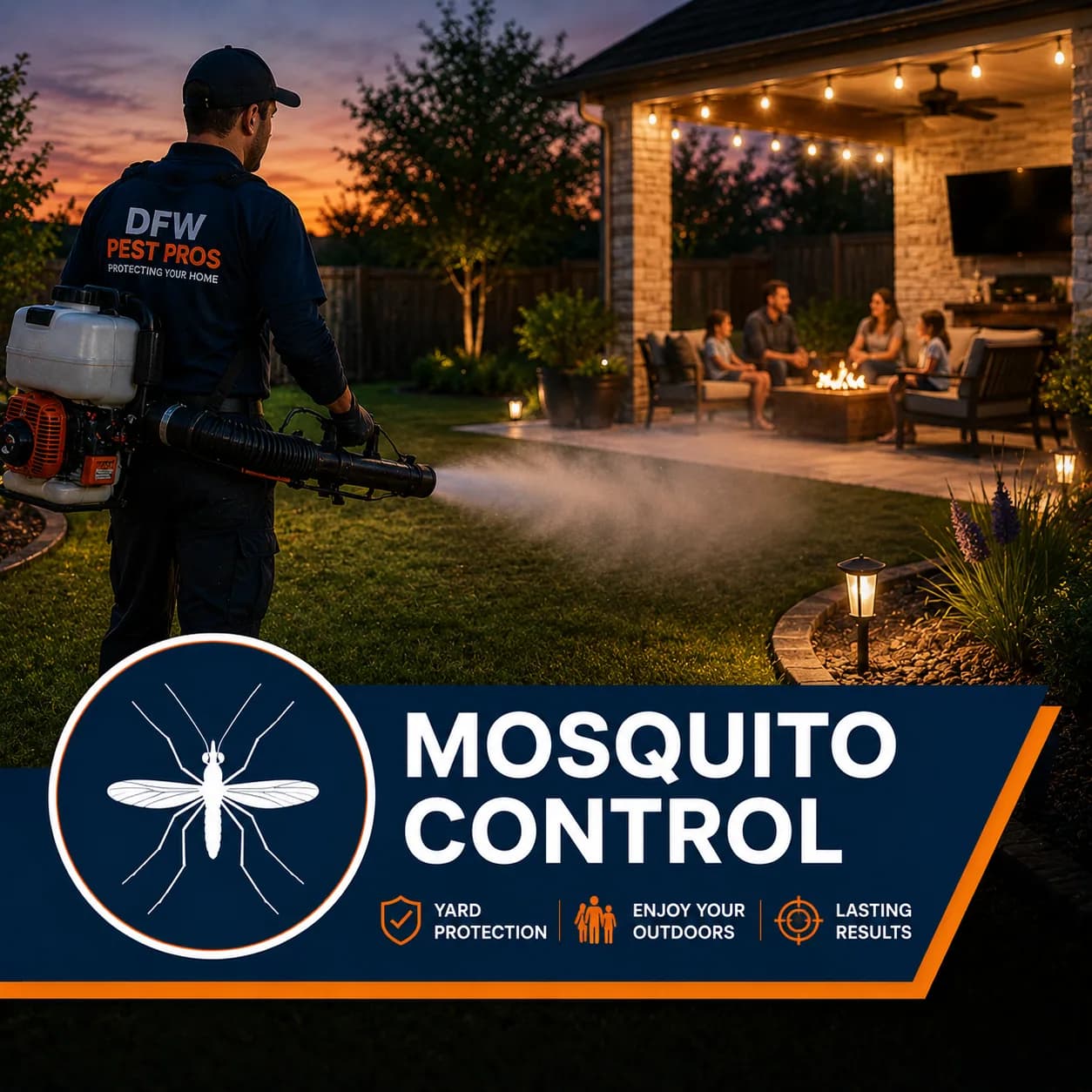
What a Mosquito Visit Typically Looks Like in Lewisville
Most providers in Lewisville open with an inspection; targeted treatment follows once the technician confirms what's active and where. For mosquito control, the typical workflow runs: yard survey to locate standing-water harborage points; larvicide application to gutters, drains, and water features; barrier spray on foliage, fence lines, and shaded harborage; monthly refresh april through october. The exact protocol, products, and follow-up cadence are determined by the independent provider that takes your call.
Seasonal Pressure in Denton County
Peak biting pressure from May through September.
Pests Covered
- Asian tiger mosquitoes
- Culex mosquitoes
Signs to Watch For
- Daytime bites in the yard
- Larval rafts in birdbaths or gutters
- Whining swarms at dusk near patios
Ready for service at a Lewisville address? Call the number above to reach dispatch and confirm the next available window.
Mosquito background reading
Lewisville Service Area
Coverage spans Lewisville — ZIP 75029, 75056, 75057, 75065, 75067, and 75077.
Mosquito in Nearby Cities
Other Services in Lewisville
Mosquito FAQs — Lewisville, TX
What does the technician do during the visit?
Inspection first, then targeted treatment. For a typical Mosquito Control appointment at a Lewisville home, that means 10 to 20 minutes walking the property, 30 to 60 minutes treating interior and exterior, and a few minutes documenting findings and next-visit recommendations. Total visit length runs 45 to 90 minutes depending on property size.
How long does mosquito barrier spray last?
Barrier treatment on a Lewisville yard runs three to four weeks of strong knockdown, then tapers. Monthly service from April through October keeps the yard usable. Heavy rain immediately after treatment can shorten the cycle and may justify an early re-spray.
How is Mosquito Control different from a big-box DIY product?
Retail products are formulated for surface knockdown; professional protocols use non-repellent residuals, growth regulators, and targeted gels that the pest carries back to the colony or harborage. The difference is what the product does after the pest contacts it — and that gap is why retail products knock down what you see and miss what you don't.
Are products applied directly to food prep areas?
No. Treatments in kitchens go into cracks, crevices, and voids — never on counters or food-contact surfaces. Gel baits are placed inside cabinet hinges and behind appliances where pests travel but food does not.
What time of year is worst for pests in Lewisville?
Spring is the heaviest swarm and emergence window in Lewisville — asian tiger mosquitoes hatch out of standing water by mid-april. Summer pressure stays high across Denton County — peak biting pressure from may through september. Fall introductions accelerate as temperatures drop — culex species drive late-season west nile risk into october. Winter activity continues indoors — overwintering eggs survive in gutter debris and tire piles.