
Rodent Control in Allen, TX
Roof rats are the dominant attic rodent across Allen and the rest of Collin County. Pecan and oak canopies along older streets give them highway access to rooflines.
- Fast dispatch
- Same-day where available
- DFW-wide coverage
Rodent Control in Allen, TX
Rodent Control is dispatched fast across Allen, TX, with same-day windows sometimes available depending on the local provider's route. Coverage spans 2 Allen ZIP codes in Collin County. Collin County sits on the northern edge of DFW with rapidly growing slab-on-grade subdivisions.
Rodent Control in Allen, TX works the same way it does in the rest of Collin County: inspection first, targeted treatment second, follow-up to confirm zero activity. Allen homes carry their own pressure profile — Allen's tight 27-square-mile footprint is mostly 1990s–2010s construction, with greenbelt-adjacent lots driving the highest mosquito and tick pressure in the city. — and the protocol adjusts accordingly.
Allen coverage runs ZIP codes 75002 and 75013 across Collin County, with a population near 105,000 and a standard suburban build pattern. The local profile leans toward fire ant, asian tiger mosquito, subterranean termite, german cockroach. Collin County sits on the northern edge of DFW with rapidly growing slab-on-grade subdivisions. Subterranean termite swarms run heavy every spring, and fire ants dominate yard call volume from April through October.
Coverage spans Allen neighborhoods including Twin Creeks, Watters Creek, Star Creek, Suncreek.
What a Rodent Visit Typically Looks Like in Allen
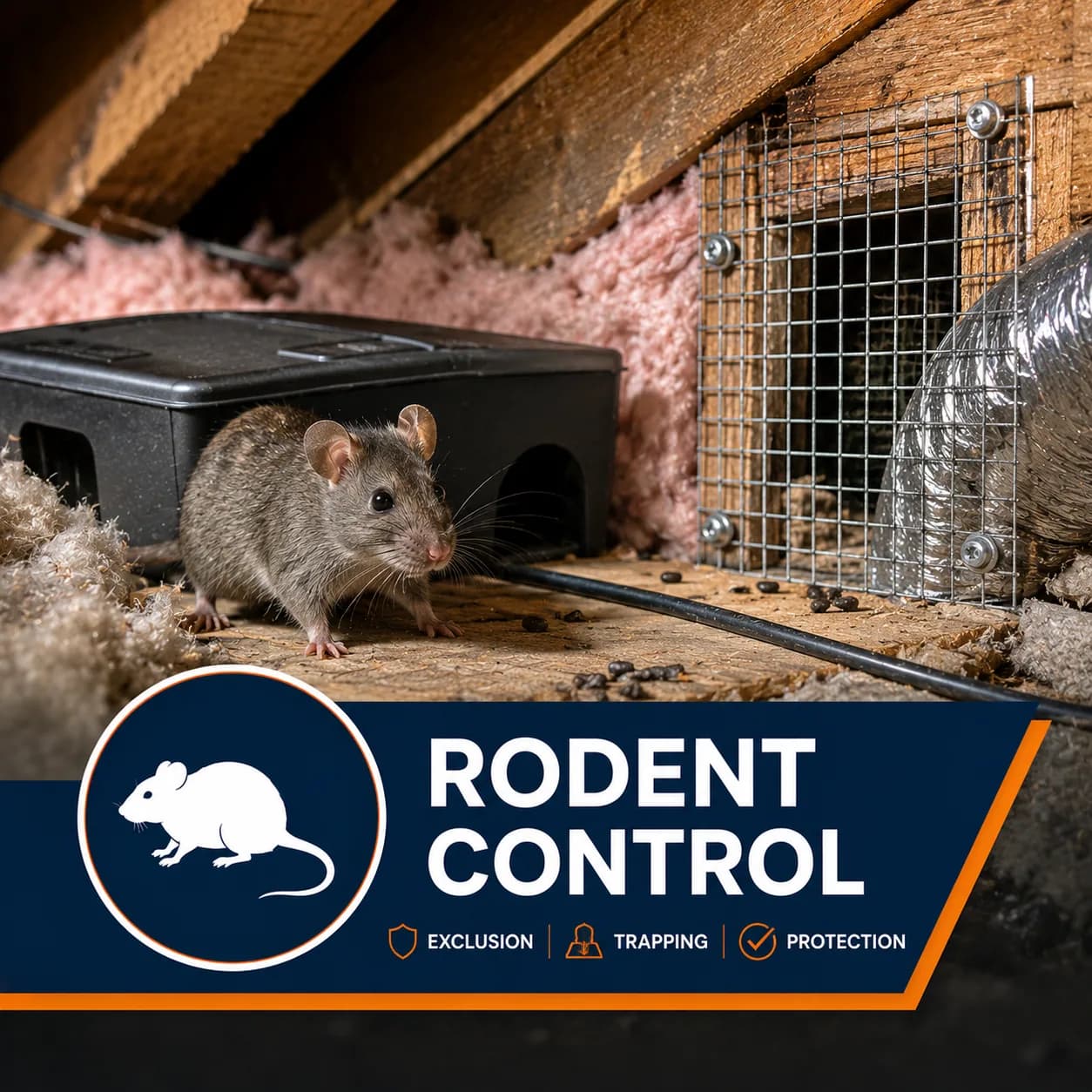
Pest control visits in Allen typically start with a property walk — interior rooms, attic access, exterior foundation band — then move into species-specific treatment. For rodent control, the typical workflow runs: attic, crawlspace, and exterior inspection to find entry points; hardware-cloth and copper-mesh exclusion of every gap larger than 0.25 inch; snap-trap and tamper-resistant station deployment per ipm protocol; two-week follow-up to confirm zero activity, then ongoing exterior stations. The exact protocol, products, and follow-up cadence are determined by the independent provider that takes your call.
Seasonal Pressure in Collin County
House mice reproduce in utility rooms and pantries year-round.
Pests Covered
- House mice
- Roof rats
- Norway rats
Signs to Watch For
- Droppings along baseboards or in pantry
- Scratching or rolling sounds in the attic after sundown
- Gnaw marks on wood, drywall, or food packaging
- Greasy rub marks along utility lines
Ready for service at a Allen address? Call the number above to reach dispatch and confirm the next available window.
Rodent background reading
Allen Service Area
Coverage spans Allen — ZIP 75002 and 75013.
Rodent in Nearby Cities
Other Services in Allen
Rodent FAQs — Allen, TX
What does the technician do during the visit?
Inspection first, then targeted treatment. For a typical Rodent Control appointment at a Allen home, that means 10 to 20 minutes walking the property, 30 to 60 minutes treating interior and exterior, and a few minutes documenting findings and next-visit recommendations. Total visit length runs 45 to 90 minutes depending on property size.
What does the inspection cover?
The first visit walks interior rooms, attic access, crawlspace if present, exterior foundation band, fence-line harborage, and any reported activity points. The technician identifies species, locates entry points, and builds a treatment plan specific to the Allen property — not a one-size-fits-all checklist.
Do Allen homes need quarterly service or one-time treatment?
Both options are available. Quarterly programs make sense for Allen addresses with year-round pressure — German roaches, fire ants, mosquitoes, or roof rats — because reintroduction is constant. One-time service fits acute problems like a wasp nest or single bed bug introduction.
Do you treat ZIP codes beyond Allen?
Yes. The crew covers Allen and surrounding Collin County ZIP codes, plus neighboring cities — the page footer lists nearby coverage. If the address falls outside the standard radius the agent confirms scheduling at booking.
Are bait stations enough on their own?
No. Bait stations alone do not solve a rodent problem in a Allen attic. The fix is exclusion — sealing every entry point larger than a quarter inch — combined with snap-trap deployment inside, then exterior stations to suppress reintroduction. Skip exclusion and the rodents come back.