
Termite Inspection & Treatment in Frisco, TX
Subterranean termites swarm across Collin County every spring. Frisco homes built on slab foundations are especially exposed — inspections catch activity before structural damage shows.
- Fast dispatch
- Same-day where available
- DFW-wide coverage
Termite Inspection & Treatment in Frisco, TX
Termite service is fast-dispatched across Frisco, TX and the rest of Collin County — often same-day where the local provider's schedule allows. Coverage spans all 4 Frisco ZIP codes. Collin County sits on the northern edge of DFW with rapidly growing slab-on-grade subdivisions.
Pest call from a Frisco address usually starts one of three ways: a sighting in the kitchen, evidence in the attic, or a swarm in the yard. Termite Inspection & Treatment covers a defined subset — subterranean termites, formosan termites, drywood termites — and this page lays out the inspection-to-resolution process for a Frisco home.
Frisco coverage runs ZIP codes 75033, 75034, 75035, and 75036 across Collin County, with a population near 202,000 and a low-density build pattern. The local profile leans toward fire ant, subterranean termite, german cockroach, asian tiger mosquito. Collin County sits on the northern edge of DFW with rapidly growing slab-on-grade subdivisions. Subterranean termite swarms run heavy every spring, and fire ants dominate yard call volume from April through October.
Coverage spans Frisco neighborhoods including Stonebriar, Lone Star Ranch, Phillips Creek Ranch, Starwood.
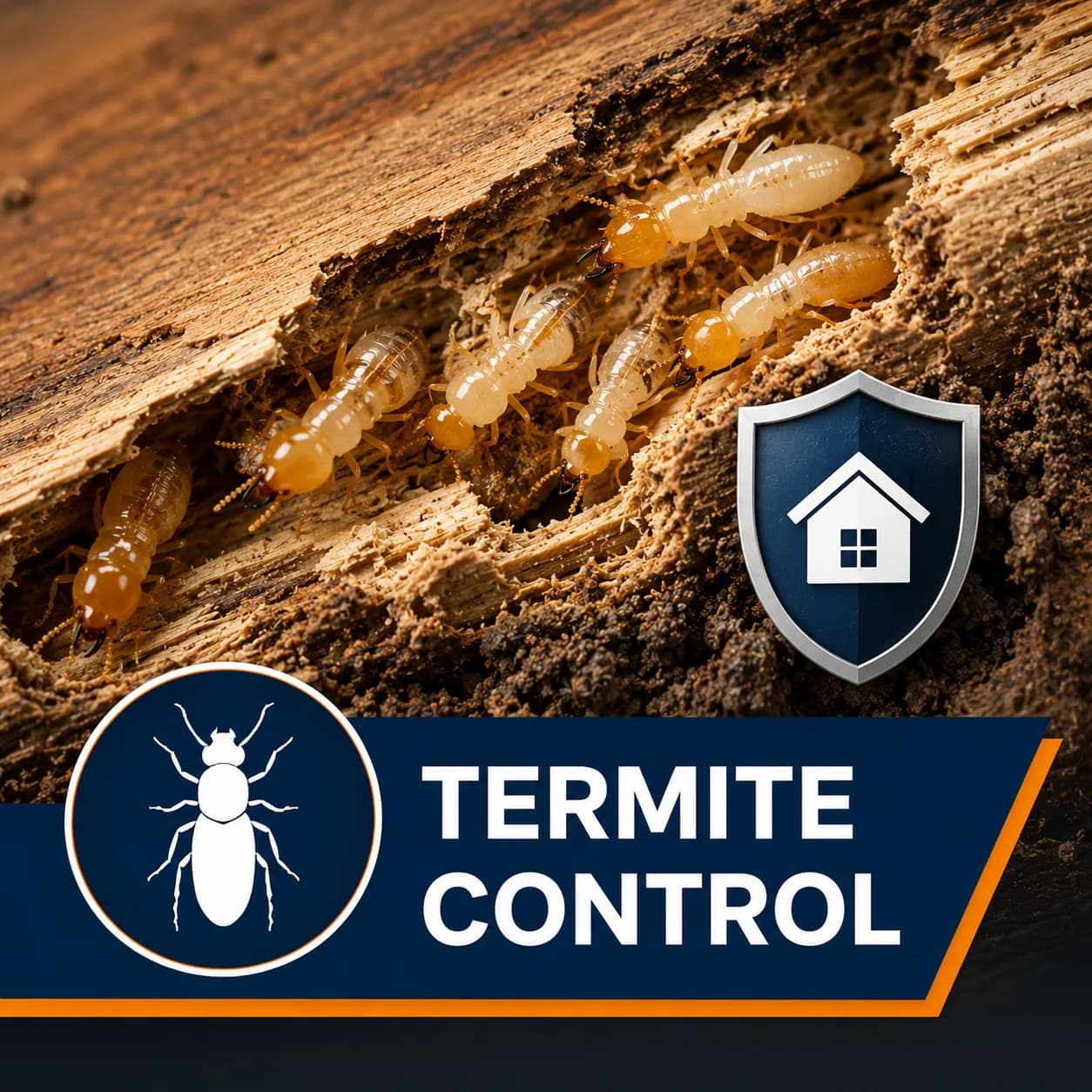
What a Termite Visit Typically Looks Like in Frisco
Pest control visits in Frisco typically start with a property walk — interior rooms, attic access, exterior foundation band — then move into species-specific treatment. For termite inspection & treatment, the typical workflow runs: full structural inspection including crawlspace, slab perimeter, and attic; identification of species and active vs. retired galleries; liquid termiticide application or in-ground bait station install; annual renewal inspection and treatment refresh. The exact protocol, products, and follow-up cadence are determined by the independent provider that takes your call.
Seasonal Pressure in Collin County
Active feeding accelerates inside slab penetrations.
Pests Covered
- Subterranean termites
- Formosan termites
- Drywood termites
Signs to Watch For
- Mud tubes on foundation walls
- Discarded wings near windows
- Hollow-sounding wood
- Sagging floors near plumbing
- Frass piles from drywood activity
To book termite service for a Frisco property, call the dispatch number listed above.
Termite background reading
Frisco Service Area
Coverage spans Frisco — ZIP 75033, 75034, 75035, and 75036.
Termite in Nearby Cities
Other Services in Frisco
Termite FAQs — Frisco, TX
Liquid termiticide or bait station — which is right for a Frisco home?
Most Frisco addresses get a liquid barrier around the slab perimeter; bait stations work better for properties where soil or hardscape rules out a continuous trench. The technician walks both options at the inspection and recommends based on the specific foundation and yard layout.
What does the inspection cover?
The first visit walks interior rooms, attic access, crawlspace if present, exterior foundation band, fence-line harborage, and any reported activity points. The technician identifies species, locates entry points, and builds a treatment plan specific to the Frisco property — not a one-size-fits-all checklist.
Do you treat both inside and outside the home?
Yes. Standard Termite Inspection & Treatment runs interior baseboards, kitchen and bath voids, garage perimeter, and the full exterior band around the foundation. Attic and crawlspace inspections are part of the first visit for any Frisco home where activity reaches that area.
Is there anything I need to do before the technician arrives?
For most Termite Inspection & Treatment visits, no prep is required. For bed bug heat treatments, prep instructions go out 48 hours ahead. For roach jobs, the technician asks for access to under-sink cabinets and behind appliances; clearing those areas in advance speeds up the visit.
How is Termite Inspection & Treatment different from a big-box DIY product?
Retail products are formulated for surface knockdown; professional protocols use non-repellent residuals, growth regulators, and targeted gels that the pest carries back to the colony or harborage. The difference is what the product does after the pest contacts it — and that gap is why retail products knock down what you see and miss what you don't.