
Mosquito Control in Frisco, TX
Mosquito calls in Frisco climb every May once Asian tiger populations hatch out. Monthly barrier service keeps yards usable through the Texas summer.
- Fast dispatch
- Same-day where available
- DFW-wide coverage
Mosquito Control in Frisco, TX
Mosquito Control dispatches fast to Frisco, TX addresses in Collin County. The local pest profile centers on fire ant, subterranean termite, german cockroach.
Active pest problem at a Frisco address? Dispatch answers calls fast and connects you with a local independent pest control provider serving Collin County — same-day appointments are sometimes available depending on the provider's schedule. This page covers what Mosquito Control typically looks like for a Frisco home — what gets treated, how the visit usually runs, and what to expect after the technician leaves.
Frisco coverage runs ZIP codes 75033, 75034, 75035, and 75036 across Collin County, with a population near 202,000 and a low-density build pattern. The local profile leans toward fire ant, subterranean termite, german cockroach, asian tiger mosquito. Collin County sits on the northern edge of DFW with rapidly growing slab-on-grade subdivisions. Subterranean termite swarms run heavy every spring, and fire ants dominate yard call volume from April through October.
Coverage spans Frisco neighborhoods including Stonebriar, Lone Star Ranch, Phillips Creek Ranch, Starwood.
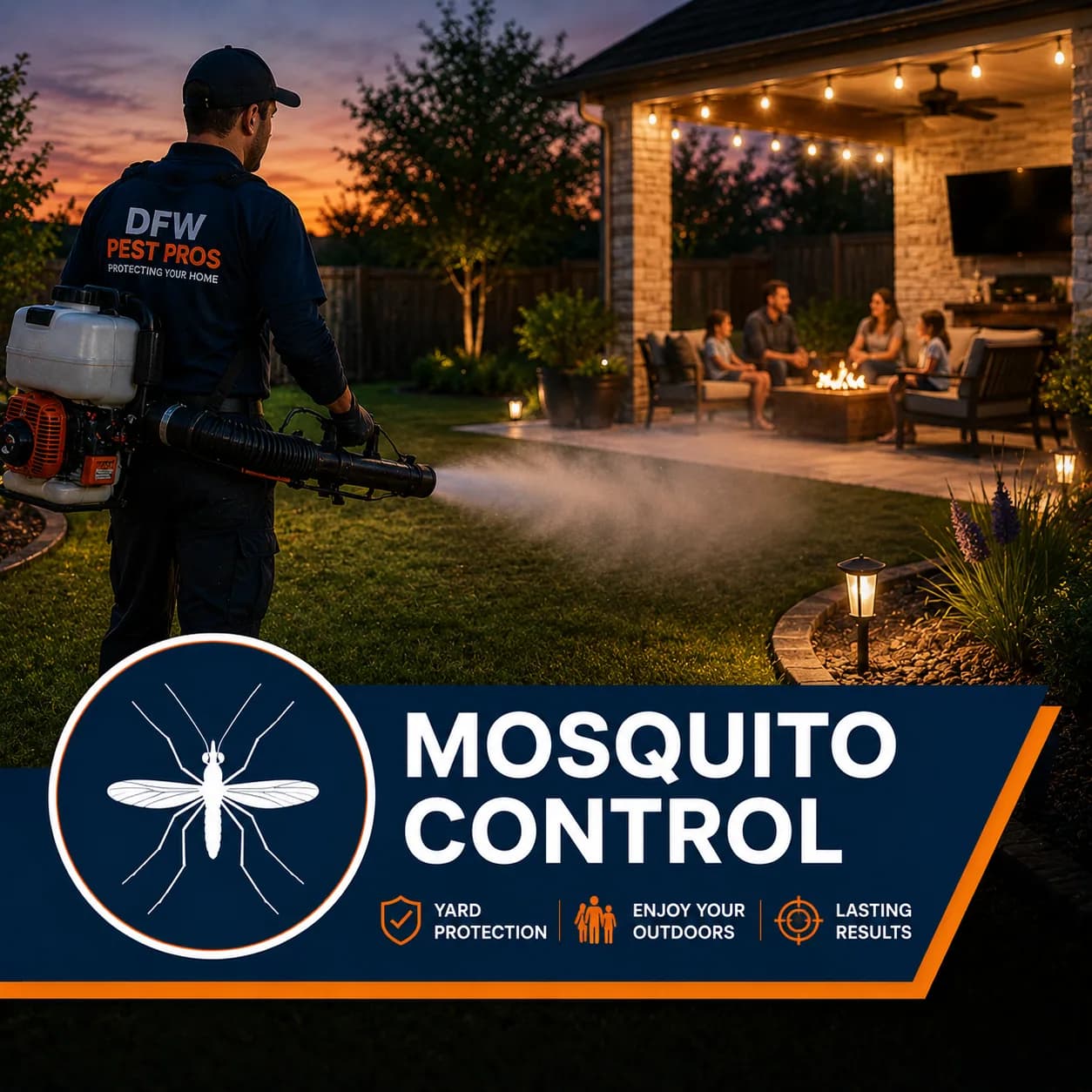
What a Mosquito Visit Typically Looks Like in Frisco
Pest control visits in Frisco typically start with a property walk — interior rooms, attic access, exterior foundation band — then move into species-specific treatment. For mosquito control, the typical workflow runs: yard survey to locate standing-water harborage points; larvicide application to gutters, drains, and water features; barrier spray on foliage, fence lines, and shaded harborage; monthly refresh april through october. The exact protocol, products, and follow-up cadence are determined by the independent provider that takes your call.
Seasonal Pressure in Collin County
Peak biting pressure from May through September.
Pests Covered
- Asian tiger mosquitoes
- Culex mosquitoes
Signs to Watch For
- Daytime bites in the yard
- Larval rafts in birdbaths or gutters
- Whining swarms at dusk near patios
Same-day windows are sometimes available for Frisco addresses depending on the provider's route. Call the number above and the dispatcher will confirm the next window.
Mosquito background reading
Frisco Service Area
Coverage spans Frisco — ZIP 75033, 75034, 75035, and 75036.
Mosquito in Nearby Cities
Other Services in Frisco
Mosquito FAQs — Frisco, TX
Do you service rentals and HOA properties in Frisco?
Yes. Mosquito Control runs for single-family homes, rental properties, condos, and HOA-managed addresses across Frisco. For tenant-occupied units, the dispatcher coordinates entry access with the property manager or owner directly.
What does the inspection cover?
The first visit walks interior rooms, attic access, crawlspace if present, exterior foundation band, fence-line harborage, and any reported activity points. The technician identifies species, locates entry points, and builds a treatment plan specific to the Frisco property — not a one-size-fits-all checklist.
Do you treat both inside and outside the home?
Yes. Standard Mosquito Control runs interior baseboards, kitchen and bath voids, garage perimeter, and the full exterior band around the foundation. Attic and crawlspace inspections are part of the first visit for any Frisco home where activity reaches that area.
How long does mosquito barrier spray last?
Barrier treatment on a Frisco yard runs three to four weeks of strong knockdown, then tapers. Monthly service from April through October keeps the yard usable. Heavy rain immediately after treatment can shorten the cycle and may justify an early re-spray.
Will one visit clear the problem?
Sometimes — for low-pressure exterior issues like wasp nests or surface ant trails, one visit usually finishes the job. Mosquito Control for established infestations runs a two-visit protocol: initial knockdown, then a follow-up two to three weeks later to confirm reproductive cycles broke.